

When we participate at an online casino, we are fundamentally trusting a digital system to replicate the odds of a physical game. That trust is not a thing we should give lightly. Game fairness is not a vague pledge or a marketing slogan; it is a quantifiable, verifiable technical standard. It dictates whether the roulette wheel functions as it should, whether the slot reels land at truly random positions, and whether the cards we are handed come from a genuinely shuffled deck. Grasping how this works changes the way we decide where to play.
The way Random Number Generators Truly Do
At the heart of every digital casino game is a piece of software called a Random Number Generator, or RNG. This is not merely a simple coin-flip script. A properly implemented RNG utilizes a complex algorithm seeded by an unpredictable physical input, typically atmospheric noise or a hardware entropy source, to produce a sequence of numbers that has no discernible pattern. These numbers are generated continuously, even when no one is playing. The moment we click spin or deal, the RNG grabs the current value and converts it into a game outcome.
The critical distinction we must grasp is between true randomness and pseudo-randomness. Casino RNGs are technically pseudo-random, but they are engineered to be indistinguishable from true randomness over billions of cycles. The algorithm must pass stringent statistical tests that examine uniform distribution, unpredictability, and a complete lack of serial correlation. If a slot has a 96% theoretical return to player, the RNG is the engine that guarantees that percentage unfolds over millions of spins, without manipulating individual results but by determining the mathematical probability of each symbol combination.
Why does this matter to us as players? Because a game with a compromised or poorly designed RNG is not a game at all; it is a rigged simulation. A fair RNG ensures that every spin, every card, and every dice roll is an independent event. The machine does not recognize we are on a losing streak, and it cannot determine to trigger a win. It simply executes a mathematical function, and the fairness rests in the integrity of that function and the randomness of its seed value.
The role of Unbiased Testing Laboratories
We are unable to review the source code of a casino game ourselves, so we rely on a system of accredited third-party auditors. These are autonomous testing laboratories that are experts in certifying gaming software. Organizations like eCOGRA, iTech Labs, and Gaming Laboratories International are the most well-known names in this field. Their job is to operate the RNG through millions of modeled game rounds and match the results against the published theoretical probabilities. They do not only check the RNG; they also confirm that the game logic properly translates the random number into the displayed outcome.
The testing process is exhaustive. Auditors scrutinize the source code to guarantee there are no hidden functions that could alter the payout rate based on player behavior, bet size, or account balance. They test the game in a standalone environment and then test it again within the live server environment. They also review the return to player calculations to verify that the promoted percentage matches the mathematical model. A game that claims 97% RTP must demonstrate that exact return over a representative sample of billions of rounds.
Once a game is approved, the laboratory issues a certificate of compliance. This certificate is usually shown in the footer of the casino website, and clicking it should lead us directly to the auditor’s report. We should continuously look for a valid, legitimate seal from a recognized lab. An expired certificate or a seal that is just a static image without a link is a red flag. This independent verification is the only concrete proof we have that the games are not manipulated, and it is the basis of a reliable platform.
Return to Player and House Advantage Explained
RTP, or RTP, is a percentage that indicates how much of the total money bet on a game is given back to players over time. If a slot has an RTP of 96%, it indicates that for every 100 euros wagered, the game is programmed to return 96 euros in winnings. The remaining 4 euros make up the house edge, which is the casino’s mathematical advantage. This is not a cost we pay per spin; it is a long-term statistical projection. In a single session, we can win far more than we wagered or lose our entire bankroll.
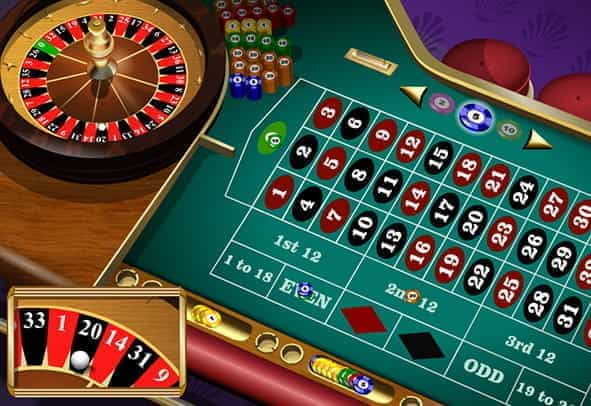
Different game categories have vastly different RTP ranges. Table games typically provide the best returns. Blackjack played with perfect basic strategy can have an RTP above 99.5%, στοίχημα ποδοσφαίρου sankracasino, meaning the house edge is less than half a percent. European roulette, with its single zero, has a house edge of 2.7%, giving it an RTP of 97.3%. Slots vary more widely, usually spanning from 94% to 98%. Understanding these numbers helps us make informed decisions about which games match our personal tolerance for risk and our preferred style of play.
We should newsbomb.gr also be cognizant of the difference between theoretical RTP and actual results. The RTP is a mathematical model that plays out over millions of rounds. In the short term, variance dominates. A high-volatility slot with a 96% RTP can drain a bankroll quickly before delivering a large win, while a low-volatility game with the same RTP produces smaller, more frequent payouts. The house edge is always active, but it works silently in the background. Knowing this prevents us from falling into the trap of believing a game is due for a win.
Live Game Honesty and Live Dealer Honesty
Live casino games bring a distinct dimension of fairness because they utilize physical equipment handled by human dealers. The RNG is replaced by a real roulette wheel, a shoe of cards, or a set of dice. The fairness principle, however, continues the same. The equipment must be validated and the procedures must be transparent. High-definition cameras broadcast every angle of the table, allowing us to view the dealer’s hands, the ball’s trajectory, and the card shuffle in real time. This visual transparency is a strong form of verification.
The integrity of a live game depends on strict operational protocols. Cards are swapped frequently, and used decks are often destroyed or shown to the camera before being tossed. Roulette wheels are frequently balanced and tested for bias. The studios themselves are watched by pit bosses and compliance officers who supervise the dealers. Many live casino providers also use optical character recognition technology to rapidly read the cards or the winning number and transmit the data to our screen, erasing any possibility of manual input error.
We can also watch the dealer’s actions for any irregularities. The shuffle should be visible and thorough. The roulette ball must be turned in the opposite direction of the wheel with sufficient force. These are small details, but they are part of the transparency that establishes a fair live game. If we ever become uncomfortable with a dealer’s handling of the game, we can simply exit the table. The best live casinos promote an environment where the physical reality of the game is the ultimate guarantee of its fairness.
Verifiably Fair Technology inside Crypto Games
A newer category of fairness verification is provably fair technology, which is usually found in blockchain-based and crypto casino games. This system removes the need for blind trust in an auditor. Instead, it uses cryptographic hash functions to enable us to verify each game outcome independently. Before a round begins, the server produces a secret random seed and shares its encrypted hash with us. We also provide a client seed. After the round, the server reveals its original seed, and we can run both seeds through the algorithm to validate the result was predetermined and not altered.
The beauty of this system is that it shifts the burden of proof. We do not need to trust the casino; we can verify the fairness ourselves using a basic online tool or a script. The casino cannot change the server seed after the fact because the hash was published beforehand. If the revealed seed does not match the hash, we understand the game was tampered with. This is a mathematically elegant solution that gives us total control over the verification process. It is a significant step forward in player empowerment.
While provably fair technology is not yet standard across all traditional online casino games, its principles are influencing the broader industry. It shows that fairness can be an active, participatory process rather than a passive certification. For players who are technically inclined, this level of transparency is deeply reassuring. It removes the black box from the equation and replaces it with a verifiable mathematical truth. We expect to see these concepts continue to gain traction as the technology matures.
The manner in which Licensing and Regulation Guarantee Fairness
A casino’s license is the official framework that implements all the technical standards we have discussed. Regulatory bodies like the Malta Gaming Authority, the Hellenic Gaming Commission, and the UK Gambling Commission do not just grant permits; they impose ongoing obligations. To acquire and keep a license, an operator must present its games and RNG for independent testing, maintain segregated player funds, and show that its systems are secure against tampering. The regulator has the ability to audit, fine, and revoke the license of any operator that fails to comply.
For players in Greece, the Hellenic Gaming Commission offers a specific layer of local oversight. A license from this body indicates the operator has met the stringent requirements of Greek law, which encompasses game fairness, player protection, and responsible gambling measures. We should always check that a casino holds a valid license from a reputable jurisdiction. This information is typically presented at the bottom of the homepage. A genuine license number can be checked on the regulator’s official public register.
Regulation also determines how disputes are managed. If we believe a game is malfunctioning or unfair, we have a formal path for complaint. The casino must have a clear system, and if we are not satisfied with the resolution, we can escalate the matter to the licensing body or an approved alternative dispute resolution service. This legal backstop is what grants the technical certifications their teeth. Without regulation, fairness is just a promise. With it, fairness is a legally enforceable standard.
Useful Methods to Verify Fairness Before Starting
We can carry out a few specific actions before placing a single bet to convince ourselves that a platform is serious about fairness. First, scroll to the footer and search for the logos of testing laboratories. Tap on them. They ought to direct to a live certificate that specifies precisely which games were tested and when the certification runs out. If the seal is just an image with no link, or if the certificate is expired, that is a cause for concern. A open operator makes this information easy to locate and verify.
Second, review the game information panel. Most well-known slots and table games have an in-game menu that presents the theoretical RTP for that particular title. We can compare this figure against the game developer’s released specifications. A discrepancy here is a significant issue. Third, read the terms and conditions regarding bonuses and withdrawals. Unfairness often hides not in the games themselves but in exploitative terms that make it impossible to withdraw winnings. A honest casino pairs fair games with fair, achievable wagering requirements.
Finally, we can test the platform with a small deposit and a withdrawal. The speed and convenience with which we can access our funds is a direct reflection of the operator’s trustworthiness. A casino that holds up payments without reason or requests excessive documentation is not working in good faith, no matter its game certifications. Payment methods like bank transfers, cards, and e-wallets should have clearly stated processing times. By combining technical verification with practical testing, we form a complete picture of what it truly entails for a casino to be fair.